Why does the tide matter for the Naples Canals?
Because of the bridges. The canals between the three islands of Naples are crossed by low bridges, and the height of the water decides how much room there is underneath. When the tide is high, the gap shrinks, and the canals can be off-limits to boats for a while. When the tide is lower, the gap opens up again.
The rest of Alamitos Bay is open at any tide. The tide changes where you can go, not whether you can go.
How does the tide work here?
Southern California has what oceanographers call a mixed tide: usually two high tides and two low tides each day, and the two highs are not the same height. One high tide is noticeably higher than the other, and one low is noticeably lower. So “high tide” on a given day might mean a modest high in the morning and a big one in the evening, or the other way around.
The whole pattern slides about 50 minutes later each day, because it follows the moon. A high tide at 3 pm today will be close to 4 pm tomorrow.
How do the moon and the seasons change it?
Around the new moon and the full moon, the tides swing farther: higher highs and lower lows. These are called spring tides, although they have nothing to do with the season. Around the quarter moons, the swings are smaller.
The highest tides of the year, often called king tides, arrive in the winter months, when the moon and the sun line up just right. If you are planning a December evening for the Naples holiday lights, it is worth checking the tide with extra care.
How do you read a tide table in two minutes?
Our tides page shows the next seven days of predictions from NOAA. Each row is a turning point:
- Time: the moment the water stops rising (a high) or stops falling (a low), in Long Beach time.
- Tide: High or Low.
- Height: in feet above mean lower low water, or MLLW, which is roughly the average of each day’s lowest tide. Zero is very low water, and the bigger the number, the higher the water.
Between a low and the next high, the water rises steadily; between a high and the next low, it falls. So the water is at its highest around the times marked High, and it stays fairly high for a while on either side.
How do you use it to pick a start time?
- Find your day. Look at the two highs and decide which one is bigger.
- Look at your rental window. If the bigger high falls in the middle of it, the canals may be closed for part of your trip.
- Shift your start. Choose a start time when the water is lower or falling, or plan to spend the high-water part of your trip on the open bay.
- Book two hours if the canals matter. It gives you room to wait out a high tide and still go through.
- When in doubt, call. Call (562) 598-2628 and ask about the canals on your date before you book.
What does a worked example look like?
Say the table for your day shows a low of 1.2 feet at 9:40 am and a high of 5.3 feet at 4:10 pm. A two-hour rental starting at 11 am sits on rising but still moderate water: a good window for the canals. A rental from 3:30 pm to 5:30 pm puts you right on the big high, so expect to spend part of it on the open bay. A start at 6 pm, as the water falls again, opens the canals back up for the evening. The numbers here are an illustration; use the real table for your date.
What can you do when the tide is too high?
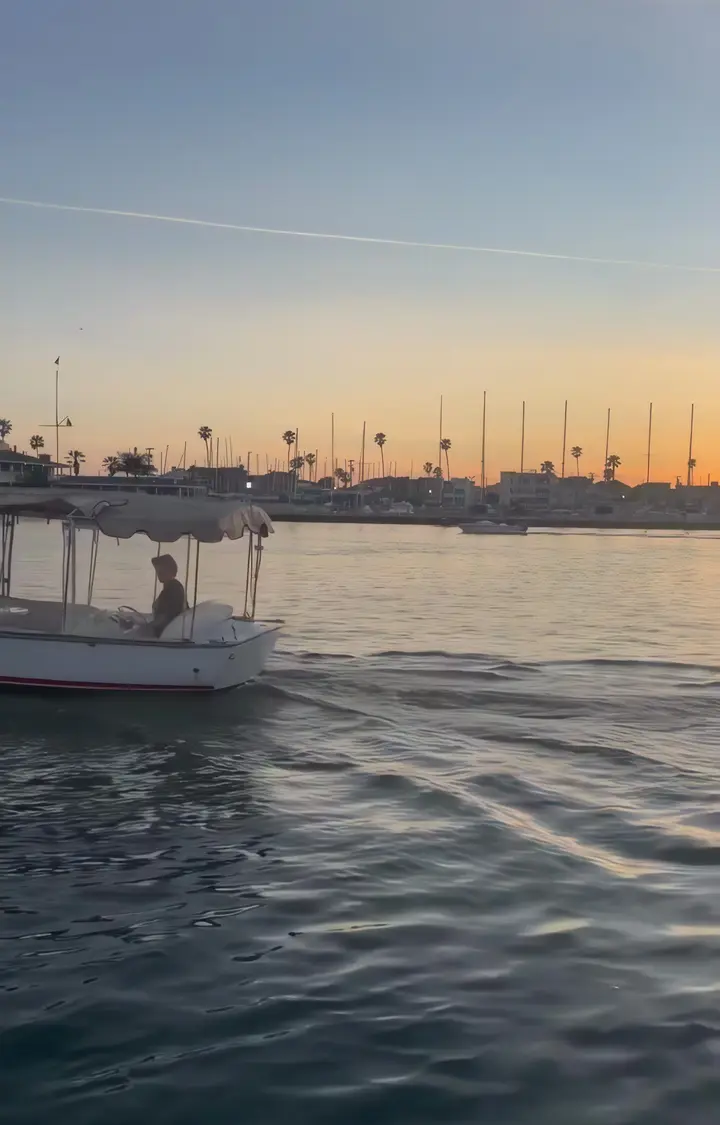
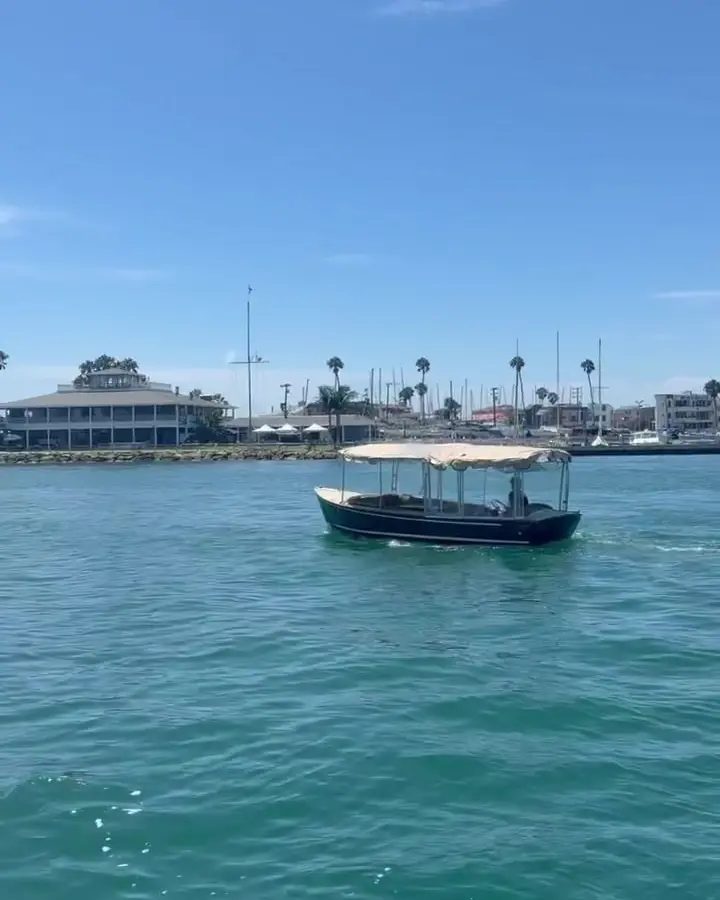
You still have the bay. On our boats, when the tide is too high for the Naples Canals, you may still cruise around Naples Island, into Jellyfish Cove, Spinnaker Bay, Marina Pacifica and Mother’s Beach. You see the canal homes from the outside instead of the inside, and the bay has its own sights: the marina, the sailboats and the local sea lions. Our Alamitos Bay page describes that wider route.
Which tide station do we use, and why?
NOAA publishes predictions for named stations. We use NOAA's Long Beach Fire Boat Pier station (9410678), the nearest prediction station in the same water as Alamitos Bay, inside the federal breakwater. The station nearest in a straight line is inside Huntington Harbour, at a highway bridge, where the tide runs about an hour behind the open bay, so it would mislead you about Alamitos Bay. Expect small differences between the prediction and the water inside the bay and the canals.
What else should you know about the water?
- Wind: the canals are sheltered, but the open bay can get choppier when an afternoon breeze picks up.
- Weather: All sales are final. If weather closes the bay, we move your rental to another day.
- Light: if you want the canals and the sunset together, line up the sunset times by month with the tide table and look for a day when the low water and the golden hour overlap.
Where can you learn more?
Our Naples Canals guide covers the route and the landmarks, our guide to the time of day that suits the canals weighs light against tide, and the complete guide to renting a Duffy in Long Beach covers everything else. Rentals are $125 for one hour or $250 for two, per boat; see prices.